



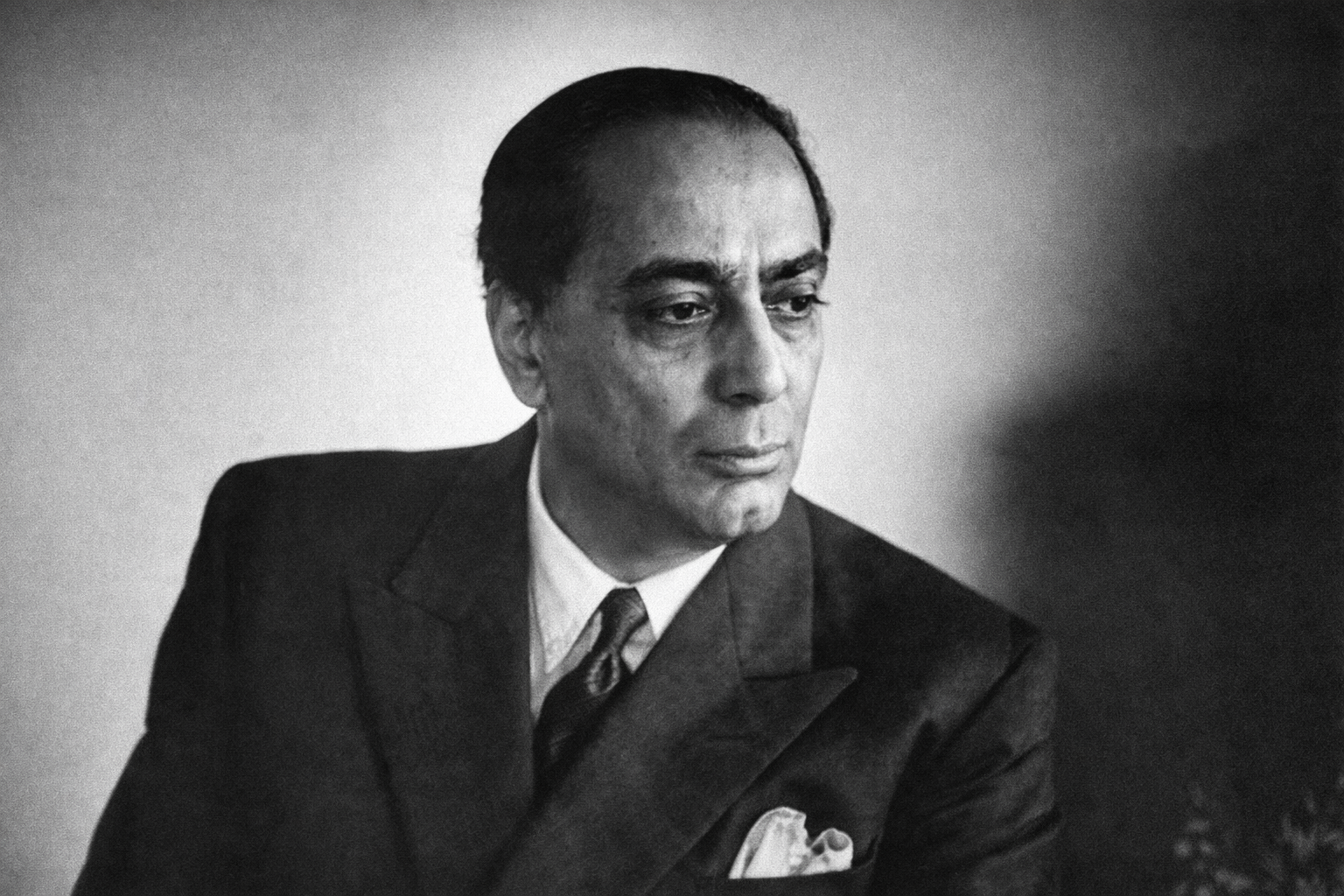
Introduction: The Shadow Over a Legacy
The name Homi Jehangir Bhabha evokes the very foundation of India’s scientific ambition. Hailed as the “Father of the Indian Nuclear Programme,” Bhabha was a visionary whose brilliance propelled India onto the global scientific stage. Yet, his remarkable life concluded abruptly and mysteriously on January 24, 1966, when Air India Flight 101, carrying him to a crucial meeting, crashed into Mont Blanc. The Homi Bhabha death remains one of the most persistent and intriguing unsolved puzzles in modern Indian history, shrouded in conspiracy theories that point fingers beyond mere accident. This comprehensive post will delve deep into the events leading up to his untimely demise, the official findings, the rampant speculation, and the profound void his passing left in India’s quest for nuclear self-reliance. Was it a tragic accident, or was the Homi Bhabha death part of a larger geopolitical game? Let’s unravel the layers of this enduring enigma.
The Architect of India’s Atomic Dream: Who Was Homi J. Bhabha?
Before dissecting the circumstances of the Homi Bhabha death, it’s crucial to understand the man himself. Homi Jehangir Bhabha was not just a scientist; he was a strategic thinker, an institution builder, and a persuasive diplomat who convinced India’s first Prime Minister, Jawaharlal Nehru, to invest heavily in nuclear research.
-
Early Life and Education: Born in 1909 into a wealthy Parsi family in Mumbai, Bhabha’s prodigious intellect was evident from a young age. He pursued mechanical engineering at Cambridge, but his passion for physics soon took over. He earned his Ph.D. in theoretical physics, making significant contributions to quantum theory and cosmic ray physics.
-
Return to India and Vision: Witnessing the outbreak of World War II in Europe, Bhabha returned to India in 1939. He quickly realized the immense potential of atomic energy, not just for power generation but also for national security. His famous letter to the Tata Trust in 1944, proposing the establishment of a fundamental research institution, laid the groundwork for future atomic endeavors.
-
Founding Institutions:
-
Tata Institute of Fundamental Research (TIFR): Established in 1945, TIFR became a cradle for scientific talent under Bhabha’s leadership.
-
Atomic Energy Commission (AEC): With Nehru’s unwavering support, Bhabha became the first chairman of the AEC in 1948, marking the official launch of India’s nuclear program.
-
Atomic Energy Establishment, Trombay (AEET): This facility, later renamed Bhabha Atomic Research Centre (BARC) in his honor, became the epicenter of India’s nuclear research and development.
-
-
Global Recognition and Influence: Bhabha was a respected figure on the international stage, advocating for the peaceful uses of atomic energy while subtly steering India towards self-sufficiency in nuclear technology. His vision was clear: India would not be dependent on others for its strategic needs.
The Fateful Journey: Air India Flight 101
The details surrounding the Homi Bhabha death are inextricably linked to the tragic fate of Air India Flight 101, also known as the Kanchenjunga. This section will reconstruct the events of that cold January morning.
-
The Date: January 24, 1966.
-
The Aircraft: A Boeing 707-437, named Kanchenjunga, registration VT-DPM. It was a relatively new aircraft, having been delivered to Air India in 1961.
-
The Route: Flight AI 101 was a scheduled passenger service from Mumbai (then Bombay) to New York, with intermediate stops in Delhi, Beirut, Geneva, and London. Bhabha was reportedly traveling to Vienna via Geneva for a meeting of the International Atomic Energy Agency (IAEA).
-
The Passenger Manifest: On board were 106 passengers and 11 crew members, totaling 117 souls. Among them were several prominent individuals, including Dr. Bhabha, whose presence made the crash particularly impactful for India.
-
The Final Approach: The flight was approaching Geneva airport. Weather conditions over Mont Blanc were reported as fair to good, but there had been a slight delay. The pilots, Captain J.M.F. Manekshaw and First Officer M.N. Dastur, were experienced.
-
The Crash Site: Mont Blanc, the highest mountain in the Alps. Specifically, the aircraft crashed into the Glacier des Bossons, near the summit of Aiguille du Goûter, at an altitude of approximately 15,700 feet (4,785 meters).
-
Sudden Disappearance: Communication with air traffic control was routine until approximately 12:00 PM GMT when the plane suddenly lost contact. There was no distress call. Search and rescue operations were immediately launched, hampered by the extreme mountainous terrain and harsh winter conditions.
-
Devastating Discovery: Wreckage was soon spotted scattered across the Glacier des Bossons. The scale of the devastation indicated no survivors. The search for bodies and the flight recorders began, a grim and challenging task in the unforgiving alpine environment. The discovery confirmed the worst: Dr. Homi Bhabha death in the tragic crash.
Official Investigations and Findings: Pilot Error or Something More?
Following any aviation disaster, an official investigation is launched to determine the cause. The Homi Bhabha death inquiry, primarily conducted by French authorities, concluded with a specific verdict.
-
Investigation Body: The Bureau of Enquiry and Analysis for Civil Aviation Safety (BEA) of France led the investigation.
-
Key Findings: The official report, released in 1967, attributed the crash to pilot error.
-
Miscalculation of Position: The pilots were believed to have miscalculated the aircraft’s position relative to Mont Blanc. They reportedly began their descent to Geneva too early, believing they had already cleared the peak.
-
Misinterpretation of Verbal Cues: There was a suspected misunderstanding or misinterpretation of verbal information from air traffic control regarding their position.
-
Lack of Radar Guidance: At that time, radar coverage was not as extensive or precise as today, especially in mountainous regions.
-
Ignoring Ground Proximity Warning: The aircraft was equipped with a ground proximity warning system, but it was either ignored, misinterpreted, or malfunctioned at the crucial moment.
-
Failure to Use VOR/DME: The investigation suggested that the crew did not adequately utilize available navigation aids (VOR/DME) which could have given them precise distance and bearing information.
-
-
No Technical Fault: The report found no evidence of mechanical failure, sabotage, or other external factors that could have caused the crash. The aircraft was deemed airworthy, and the crew was experienced.
-
Unrecovered Black Box: Crucially, the flight data recorder (FDR) and cockpit voice recorder (CVR) – the “black boxes” – were never fully recovered. This absence meant that crucial cockpit conversations and flight parameters from the final moments could not be analyzed, leaving an element of uncertainty. This missing evidence has significantly fueled alternative theories regarding the Homi Bhabha death.
Timeline of Key Incidents: The Homi Bhabha Legacy
| Date | Incident / Milestone | Significance |
| October 30, 1909 | Birth of Homi J. Bhabha | Born into a prominent Parsi family in Mumbai; beginning of a scientific era. |
| 1944 | Letter to Tata Trust | Bhabha proposed an institute for fundamental research, predicting nuclear power’s role in India. |
| June 1, 1945 | Founding of TIFR | The Tata Institute of Fundamental Research is established in Mumbai. |
| August 1948 | Formation of AEC | India’s Atomic Energy Commission is formed with Bhabha as the first Chairman. |
| October 1965 | The 18-Month Declaration | Bhabha announces on AIR that India could produce a nuclear device in 18 months. |
| Jan 11, 1966 | Death of Lal Bahadur Shastri | PM Shastri dies in Tashkent; creates a leadership vacuum and fuels conspiracy links. |
| Jan 24, 1966 | Air India Flight 101 Crash | The Kanchenjunga crashes into Mont Blanc, killing Bhabha and 116 others. |
| 1967 | Official French Report | Investigation concludes “Pilot Error” as the cause due to miscalculated descent. |
| Jan 12, 1967 | Renaming of AEET | PM Indira Gandhi renames the Trombay facility to Bhabha Atomic Research Centre (BARC). |
| May 18, 1974 | Pokhran-I (Smiling Buddha) | India conducts its first nuclear test, fulfilling Bhabha’s long-term vision. |
| 2008 | Crowley Allegations | Journalist Gregory Douglas publishes claims of CIA involvement in the crash. |
| 2012 | Diplomatic Bag Recovery | A diplomatic mailbag from the 1966 crash is found by a climber on Mont Blanc. |
The Web of Conspiracy: A Geopolitical Chessboard
The official explanation for the Homi Bhabha death has never fully satisfied many, especially given the geopolitical climate of the time and Bhabha’s critical role. The prevailing conspiracy theories often point to external agencies seeking to halt India’s nuclear ambitions.
-
The Timing is Key:
-
Shastri’s Death: Just 13 days before Bhabha’s plane crash, India’s then Prime Minister, Lal Bahadur Shastri, died suddenly in Tashkent, Uzbekistan, after signing the Tashkent Declaration following the 1965 Indo-Pak War. The official cause was a heart attack, but this too is subject to persistent conspiracy theories. Two sudden, high-profile deaths of key Indian figures in such a short span raised eyebrows.
-
Nuclear Declaration: Only weeks before his death, Bhabha had famously declared on All India Radio that India could produce a nuclear device within 18 months if it chose to do so. This bold statement sent shockwaves internationally, particularly among nuclear powers wary of proliferation.
The “CIA Angle”: Stopping India’s Nuke Program:
-
Robert Crowley’s Allegations: The most prominent conspiracy theory gained traction in 2008 with the publication of “Conversations with the Crow” by Gregory Douglas. Douglas claimed to have had extensive telephone conversations with former CIA operative Robert Crowley, who allegedly confessed to the CIA’s involvement in the crashes of both Shastri and Bhabha’s planes.
-
The Modus Operandi: According to Douglas’s account, Crowley claimed that a bomb was planted in the cargo hold of Flight 101. The objective was clear: eliminate Bhabha to derail India’s nascent nuclear weapons program, which the US viewed as a destabilizing factor in South Asia.
-
Motive: The Cold War was at its peak. Nuclear proliferation was a major concern for the US and USSR. India, a non-aligned nation, developing its own nuclear capabilities was seen as a threat to the established world order and could encourage other nations to follow suit.
-
Disputed Reliability: It is crucial to note that Gregory Douglas’s work and the veracity of Crowley’s alleged confessions are highly disputed and often dismissed by mainstream historians and intelligence experts as unreliable or fabricated. No independent corroboration has ever emerged.
-
-
-
Other Suspects and Theories:
-
Other Foreign Intelligence Agencies: Some theories speculate about other foreign powers who might have had an interest in curtailing India’s nuclear program.
-
Internal Sabotage: Less prevalent but occasionally floated are theories of internal sabotage, though these lack any substantial backing.
-
-
The Enduring Mystery: Despite the official report, the lack of a recovered black box, the suspicious timing, and the geopolitical implications have ensured that the Homi Bhabha death remains a fertile ground for speculation and belief in a covert operation. For many, the idea of a simple pilot error is too convenient for such a pivotal figure.
The Aftermath: A Void in India’s Scientific Leadership
The Homi Bhabha death was not just the loss of a brilliant individual; it created a monumental void in India’s scientific and strategic leadership.
-
Leadership Crisis: Bhabha was not merely a scientist; he was a charismatic leader, an astute administrator, and a powerful advocate for science. His sudden demise left a vacuum that was difficult to fill immediately.
-
Impact on the Nuclear Program: While India’s nuclear program continued, there’s a widely held belief that Bhabha’s vision, drive, and personal relationships with key political figures (like Nehru) were irreplaceable. Some historians suggest that the pace and direction of the program might have been different, possibly faster, had he lived.
-
BARC: A Living Legacy: In a fitting tribute, the Atomic Energy Establishment, Trombay (AEET), was renamed the Bhabha Atomic Research Centre (BARC) on January 22, 1967, a year after his death. BARC stands today as the cornerstone of India’s nuclear power generation and strategic defense capabilities, a testament to Bhabha’s foundational work.
-
Continuation of Nuclear Ambition: Despite the setback, India’s resolve to achieve nuclear self-reliance did not waver. Under subsequent leadership, the program continued its trajectory, culminating in the peaceful nuclear explosion (PNE) of Pokhran-I in 1974, famously code-named “Smiling Buddha.” This event firmly established India as a de facto nuclear power, a testament to the seeds Bhabha had sown.
-
Archaeological Discoveries on Mont Blanc: Decades after the crash, artifacts from Flight 101 continue to surface on the Mont Blanc glacier due to glacial melt. In 2012, a diplomatic mail bag with Indian newspapers and letters from 1966 was found. More recently, in 2017, human remains and other fragments were discovered, offering poignant reminders of the tragedy and its victims, including those from the flight carrying Homi Bhabha.
Mont Blanc’s Lingering Secrets: More Discoveries
Mont Blanc has been an icy tomb for Air India Flight 101 for decades, but the dynamic nature of glaciers means that new pieces of the puzzle occasionally emerge, keeping the memory of the Homi Bhabha death and other victims alive.
-
Glacier des Bossons: This particular glacier, where the Kanchenjunga crashed, is known for periodically revealing artifacts from past crashes as the ice moves and melts.
-
Recent Discoveries:
-
2012 Diplomatic Bag: A mountaineer discovered a jute bag containing diplomatic mail from the Indian Ministry of External Affairs, still carrying its contents of newspapers, calendars, and letters dated to 1966. This find reignited interest in the crash.
-
2017 Human Remains and Engine Parts: Another discovery included human remains and a section of an aircraft engine. These findings are often sent for identification, offering closure to families of the victims.
-
Continued Search: Local guides and enthusiasts occasionally comb the glacier for artifacts, driven by historical interest and the desire to honor the victims. Each new discovery, however small, serves as a stark reminder of the tragic crash and the unrecovered evidence surrounding the Homi Bhabha death.
-
Conclusion: The Unspoken Truth
The Homi Bhabha death remains a compelling blend of tragic accident and whispered intrigue. While the official verdict points to pilot error, the context of the Cold War, India’s burgeoning nuclear ambitions, and the mysterious string of high-profile deaths fuel an enduring belief in a larger, covert narrative. Regardless of the ultimate truth, Bhabha’s legacy as the visionary behind India’s nuclear journey is undeniable. His contributions laid the bedrock for a self-reliant India, a dream that continues to flourish through institutions like BARC, standing as a testament to the extraordinary life and enigmatic end of one of India’s greatest scientific minds. The question of what truly caused the Homi Bhabha death may never be definitively answered, ensuring its place as one of history’s most persistent mysteries.