



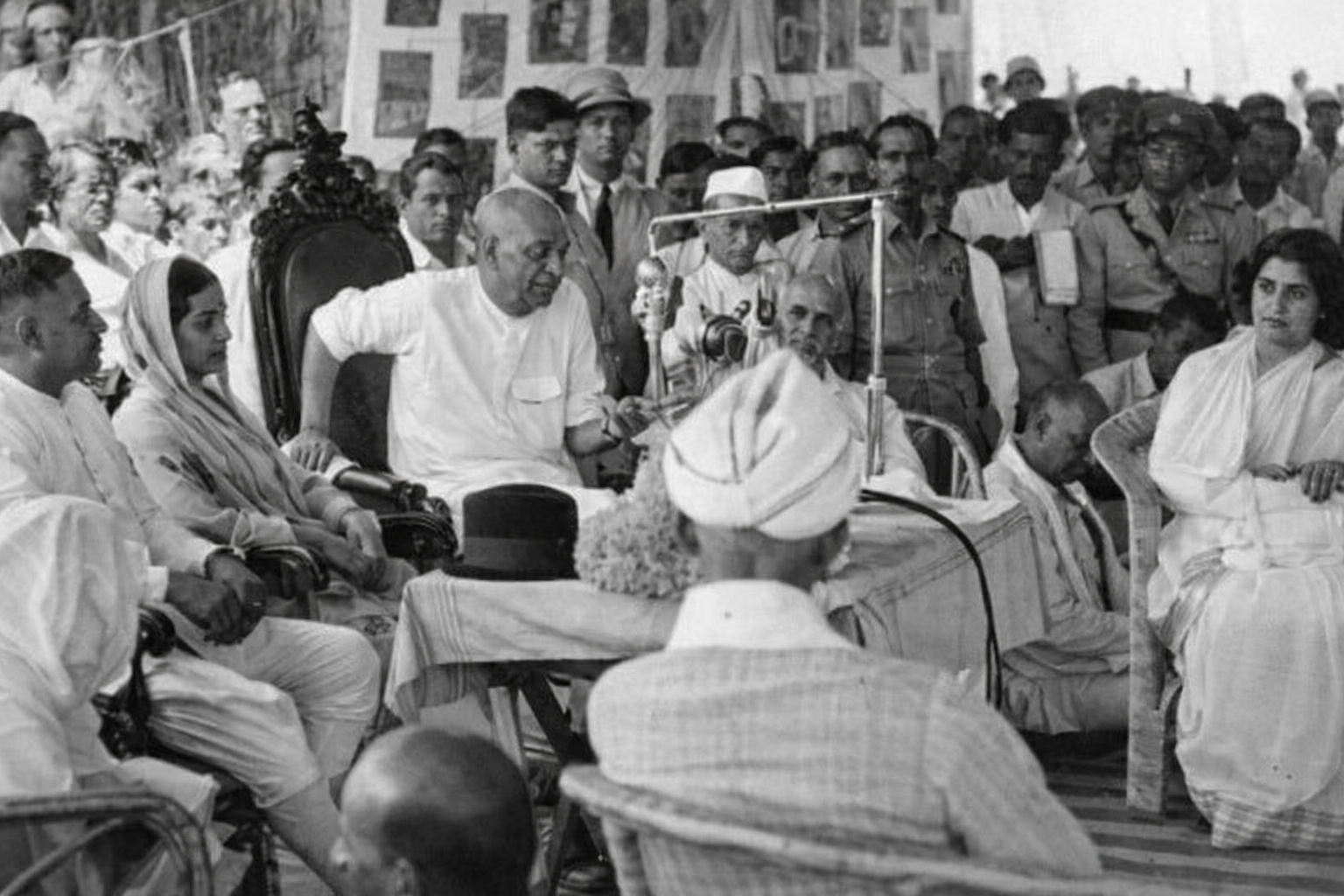
The Bardoli Satyagraha of 1928 stands as a landmark chapter in the Indian independence movement. It was a non-violent “No-Tax” campaign that not only forced the British Raj to bow before the collective will of the peasantry but also catapulted Vallabhbhai Patel to the forefront of national leadership. For students and historians alike, Bardoli is the gold standard for how organized, disciplined, and peaceful resistance can dismantle oppressive economic policies.
1. The Historical Genesis: A Legacy of Resistance
To understand 1928, one must look back to 1922. Bardoli, a taluka in the Surat district of present-day Gujarat, was originally chosen by Mahatma Gandhi as the launchpad for the Civil Disobedience movement following the 1921 Ahmedabad session of the Congress.
However, the Chauri Chaura incident in February 1922 led Gandhi to suspend the movement nationwide. While the national momentum paused, the local leadership in Bardoli—specifically the Mehta brothers (Kalyanji and Kunverji) and the Patidar Yuvak Mandal—continued working on social reforms and grassroots mobilization. This established a foundation of trust and discipline among the local farmers (the Patidars and Anavil Brahmins) and the landless laborers (the Kaliparaj community).
2. The Trigger: The 1926 Land Revenue Revision
The conflict began not with a political demand, but an economic one. In January 1926, the British Government of the Bombay Presidency conducted a periodic land revenue settlement. The Settlement Officer, M.S. Jayakar, recommended a drastic increase in the land revenue.
The Economic Impact
-
The Original Hike: The government initially proposed a 30% increase in the land revenue assessment.
-
The Adjustment: Following initial protests and petitions by local leaders, the government marginally reduced this, but still settled on a 22% enhancement.
-
The Grievance: The farmers argued that the assessment was flawed. It failed to account for the falling prices of cotton and the deteriorating economic condition of the peasantry. The hike was seen as arbitrary and scientifically unfounded.
3. The Call for Leadership: Enter Vallabhbhai Patel
By early 1928, the farmers of Bardoli had exhausted all legal avenues. Petitions were ignored, and the government remained firm on the 22% increase. The local leaders approached Vallabhbhai Patel, who was then known for his administrative success as the President of the Ahmedabad Municipality and his leadership in the Kheda Satyagraha (1918) and Borsad Satyagraha (1923).
Patel was cautious. He famously told the delegation:
“I will take up the lead only if you are prepared to face the worst—seizure of your property, your cattle, and even your lands. This is not a struggle for a day; it is a test of your character.”
After receiving a green light from Mahatma Gandhi, Patel officially took charge. He arrived in Bardoli in February 1928 and immediately transformed the protest from a local grievance into a military-style organized campaign.
Table 1: Comparative Revenue Assessment (1928)
| Category | Details |
| Proposed Hike (Initial) | 30% |
| Final Government Order | 22% |
| Peasants’ Demand | Complete suspension of hike & Independent Inquiry |
| Actual Settlement (Post-Satyagraha) | ~6.03% |
4. The “Chhavani” Strategy: Organizing the Masses
Patel’s first move was to divide the Bardoli taluka into 13 specialized camps (Chhavanis), each headed by a seasoned leader. This ensured that the movement was decentralized yet perfectly coordinated.
Key Organizational Pillars:
-
Information Network: A daily news bulletin (Satyagraha Patrika) was published to counter government propaganda and keep the morale of the farmers high.
-
Social Integration: Patel worked to bridge the gap between the ‘Ujliparaj’ (fair-skinned/upper castes) and the ‘Kaliparaj’ (lower castes/landless laborers). He renamed the Kaliparaj as ‘Raniparaj’ (People of the Forest) to instill a sense of dignity.
-
The Pledge: Every farmer took a solemn oath in the name of God (Prabhu) or their conscience that they would not pay a single pie of the increased tax, even if it meant their total ruin.
IMPORTANT NOTE:
The Bardoli Satyagraha is unique because it was a “purely economic” struggle that stayed strictly non-political in its early stages. This prevented the British from using “sedition” as an easy excuse to crush the movement instantly.
Table 2: Key Personalities of the Initial Phase
| Name | Role / Contribution |
| Vallabhbhai Patel | Supreme Commander of the Satyagraha. |
| Kalyanji & Kunverji Mehta | Local organizers who built the initial grassroots base. |
| Narhari Parikh | Provided intellectual and logistical support to Patel. |
| Ravi Shankar Vyas (Maharaj) | Focused on mobilizing the rural masses and lower-caste communities. |
In this second segment, we delve into the heat of the struggle: the British government’s aggressive crackdown, the unprecedented mobilization of women, and the tactical brilliance that neutralized the Raj’s attempts to break the peasants’ spirit.
5. The Peak of Resistance: Facing the ‘Japti’
As the movement gained momentum in March and April of 1928, the Bombay Presidency government, under Governor Sir Leslie Wilson, decided to use force. They initiated the Japti (Seizure) process to recover the unpaid taxes.
Government Tactics of Repression
-
Pathan Guards: The government hired specialized “Pathan” guards from outside the district to forcibly enter houses and seize property. This was a psychological tactic intended to intimidate the local Gujarati farmers.
-
Seizure of Cattle: For the farmers, their buffaloes and cows were their most precious assets. The government seized thousands of cattle, often keeping them in cramped, unhygienic conditions without fodder to pressure the owners.
-
Auctioning Land: The government attempted to auction the seized lands to outsiders. However, such was the social boycott orchestrated by Patel that no one from the district—and very few from outside—dared to bid for the “stolen” land.
-
Mass Arrests: Hundreds of local leaders and “Vatandars” (village officials) who resigned in protest were arrested and imprisoned.
The Peasants’ Response: The “Lock and Key” Strategy
Under Sardar Patel’s direction, the farmers adopted a unique form of resistance. As soon as the Japti officers were spotted, a bugle would be sounded or a drum beaten. The entire village would retreat into their homes and lock the doors.
-
Government officials often spent entire days in deserted streets, unable to find a single person to serve a legal notice or a single laborer to help carry away seized goods.
-
The farmers remained inside with their cattle for weeks, maintaining a “voluntary house arrest” to protect their livestock from seizure.
6. The “Sardar” of the Women: A Social Revolution
One of the most remarkable features of Bardoli was the mass participation of women. Previously confined to their homes, women became the backbone of the Satyagraha.
-
Mobilization: Women like Mithuben Petit, Bhaktiba Desai, Maniben Patel (Sardar’s daughter), and Sharda Mehta toured the villages, singing patriotic songs and delivering speeches.
-
The Title of ‘Sardar’: While historians debate the exact moment, it is widely accepted that the women of Bardoli first started addressing Vallabhbhai Patel as ‘Sardar’ (Chief/Leader). It was a title born out of grassroots respect rather than political appointment.
-
Defiance: Women often stood at the doorsteps of their houses, mocking the Japti officers and refusing to yield, even when their household brass utensils were being carried away.
7. National Impact and Political Solidarity
By June 1928, Bardoli was no longer a local dispute; it was a national cause. The discipline of the Satyagrahis captured the imagination of the entire country.
-
Resignations: Many members of the Bombay Legislative Council, including K.M. Munshi and Lalji Naranji, resigned their seats in protest against the government’s high-handedness.
-
The Role of the Press: Newspapers like The Bombay Chronicle and The Hindu gave daily updates. Even the international press began covering the “Peasant Revolt in India.”
-
The Influx of Volunteers: Volunteers from across India began pouring into Gujarat. To prevent the government from labeling them “outsiders,” Patel ensured that the core work remained in the hands of the local Bardoli farmers.
Table 3: Roles of Women Leaders in Bardoli
| Leader | Primary Contribution |
| Mithuben Petit | Parsi social worker who mobilized the ‘Raniparaj’ and women. |
| Maniben Patel | Managed the logistics and communication for her father, Sardar Patel. |
| Bhaktiba Desai | Encouraged women to face the Japti (seizures) without fear. |
| Anisuyaben Sarabhai | Provided support from the labor unions of Ahmedabad. |
8. The Government in a Corner
By July 1928, the British administration was in a dilemma. The revenue collection was a total failure, the jails were overflowing, and the reputation of the British Empire was being tarnished by reports of seizing the “milch cattle” of poor farmers.
The Viceroy, Lord Irwin, grew concerned that if the Bardoli model spread to the rest of India, the British Raj would face an administrative collapse. He pressured the Bombay Government to find a dignified way to retreat.
IMPORTANT NOTE:
Sardar Patel’s strategy of “Social Boycott” was his most lethal weapon. Anyone who collaborated with the British or bought seized land was socially isolated—no one would talk to them, trade with them, or even perform religious rites for them. This total unity made the British administration’s “Divide and Rule” policy fail for the first time in decades.
9. The Resolution: A Negotiated Retreat
By August 1928, the situation had reached a breaking point. The British government was wary of the Satyagraha spreading to other talukas, and the Indian National Congress was preparing for a nationwide movement.
The mediation was primarily led by Sir Chunilal Mehta, a member of the Governor’s Executive Council. After intense negotiations between the government and the representatives of the farmers (supported by members of the Legislative Council), a settlement was reached on August 6, 1928.
The Terms of the Settlement:
-
Release of Prisoners: All Satyagrahis arrested during the movement were to be released immediately.
-
Restoration of Land: All lands that had been seized and sold to third parties were to be returned to their original owners. (In cases where the land was already sold, sympathetic businessmen like those from Bombay bought it back to return it to the farmers).
-
Reinstatement: Village officials (Talatis and Patels) who had resigned in protest were reinstated.
-
The Judicial Inquiry: The government agreed to appoint an independent body to re-examine the 22% tax hike.
10. The Broomfield-Maxwell Commission
To save face, the British government appointed a committee consisting of R.S. Broomfield (a judicial officer) and R.M. Maxwell (a revenue officer) to conduct a “scientific” review of the Bardoli land revenue.
The Findings
The commission spent months touring the villages, examining soil quality, and interviewing farmers. Their report, published in 1929, was a complete vindication of Sardar Patel’s stance.
-
The commission found that the initial 22% hike was based on faulty data and ignored the actual economic distress of the farmers.
-
The Result: The tax hike was reduced from 22% to a mere 6.03%.
11. Statistical Summary of the Victory
| Metric | Pre-Satyagraha (Proposed) | Post-Satyagraha (Result) |
| Tax Hike Percentage | 22% – 30% | 6.03% |
| Land Seized | Thousands of acres | 100% Returned |
| Livestock Seized | Hundreds of Buffaloes/Cattle | Returned or Compensated |
| Political Prisoners | Hundreds | All Released |
12. The Legacy of Bardoli
The success of Bardoli was not just an economic victory; it changed the trajectory of the Indian Freedom Struggle.
1. The Birth of a National Hero
Before Bardoli, Vallabhbhai Patel was a respected regional leader. After Bardoli, he was “The Sardar”—the man who could organize the masses with the precision of an army general. Mahatma Gandhi himself remarked that in Bardoli, he found a commander who could implement non-violence as a practical weapon of war.
2. The Blueprint for the Dandi March
The organizational structure used in Bardoli—the Chhavanis, the use of local volunteers, and the emphasis on social boycott—provided the blueprint for the Salt Satyagraha (1930). Many of the volunteers who marched to Dandi were trained in the “Bardoli school” of protest.
3. Empowerment of the Peasantry
Bardoli proved that the “dumb millions” (as the peasantry was often called) were capable of disciplined political action. It shifted the focus of the Congress from urban elite politics to rural mass mobilization.
13. Chronology of Major Events (1926–1929)
-
January 1926: M.S. Jayakar recommends a 30% revenue hike.
-
February 1928: Sardar Patel takes leadership; the Satyagraha begins.
-
April 1928: Peak of Government repression (Pathan guards and Japti).
-
June 12, 1928: ‘Bardoli Day’ observed across India in solidarity.
-
August 6, 1928: Settlement reached between the Government and the Satyagrahis.
-
1929: Broomfield-Maxwell Report officially reduces the tax hike to 6.03%.
IMPORTANT NOTE:
When writing about Bardoli in exams, always mention the “Maxwell-Broomfield Commission.” It is the specific legal victory that proved the Satyagraha was based on truth (Satya) and logic, not just emotional rebellion. Also, remember that Mahatma Gandhi stayed at ‘Swaraj Ashram’ in Bardoli during the movement, acting as a moral advisor while Patel handled the strategy.
Conclusion
The Bardoli Satyagraha remains a masterclass in civil disobedience. It showed that non-violence is not a sign of weakness but a form of “organized strength.” Through the unity of the Patidars, the Anavil Brahmins, and the Raniparaj, and under the iron will of Sardar Patel, Bardoli proved that even the mightiest empire cannot govern a people who refuse to cooperate with injustice.
FAQs:
The immediate trigger was the decision of the Bombay Presidency government to increase the land revenue in the Bardoli Taluka by 22%. This revision was based on the recommendations of Settlement Officer M.S. Jayakar, which the farmers argued were scientifically flawed and ignored the falling prices of cotton and general economic distress.
It followed the Gandhian principles of Truth (Satya) and Non-violence (Ahimsa). Participants took a formal pledge not to pay taxes, even in the face of property seizure (Japti) or imprisonment, and maintained total discipline without resorting to physical retaliation against the British authorities or the “Pathan” guards.
The title ‘Sardar’ (meaning Chief or Leader) was conferred upon Patel by the women of Bardoli. It symbolized his transition from a regional leader to a national figure with exceptional organizational skills. Mahatma Gandhi later popularized the title nationally.
The Raniparaj (formerly known as Kaliparaj) were the forest-dwelling, landless laborers of the region. Sardar Patel worked extensively to integrate them into the movement to ensure the British could not use them as “strike-breakers” or laborers to carry away seized goods. Their participation made the boycott total and inclusive.
Sardar Patel divided the Bardoli Taluka into 13 strategic camps called Chhavanis. Each camp was manned by experienced volunteers and leaders who served as local headquarters to disseminate information via the Satyagraha Patrika, keep morale high, and monitor the movement of government officials.
Patel organized a total social boycott of anyone who collaborated with the British—including those who bought seized land or cattle. These “collaborators” were denied essential services (like barbers or smiths) and social interaction. This ensured that despite government auctions, no local person would bid for the seized properties.
The Broomfield-Maxwell Commission was appointed. It consisted of a judicial officer (Broomfield) and a revenue officer (Maxwell). They admitted the 22% hike was unjustified and recommended reducing it to 6.03%, marking a total victory for the Satyagrahis.
Prominent leaders like K.M. Munshi and Lalji Naranji resigned from the Council in solidarity with the Bardoli farmers. This put immense political pressure on Governor Sir Leslie Wilson and the Viceroy, Lord Irwin, showing that the movement had urban and constitutional support.
Gandhi did not lead the movement on the ground—that was entirely Sardar Patel’s domain. However, Gandhi gave his “green light” to the struggle and moved to the Swaraj Ashram in Bardoli toward the end of the movement to provide moral support and be ready to take over if Patel were arrested.
1. It restored the faith of the Indian masses in Civil Disobedience after the Chauri Chaura setback.
2. It proved that the peasantry could be a potent political force.
3. It provided the organizational blueprint and a trained cadre for the Civil Disobedience Movement (1930) and the Dandi March.